Expanding Foam Bags vs. Bubble Wrap & Packing Peanuts: Breakage Rate & Cost Comparison for E-Commerce
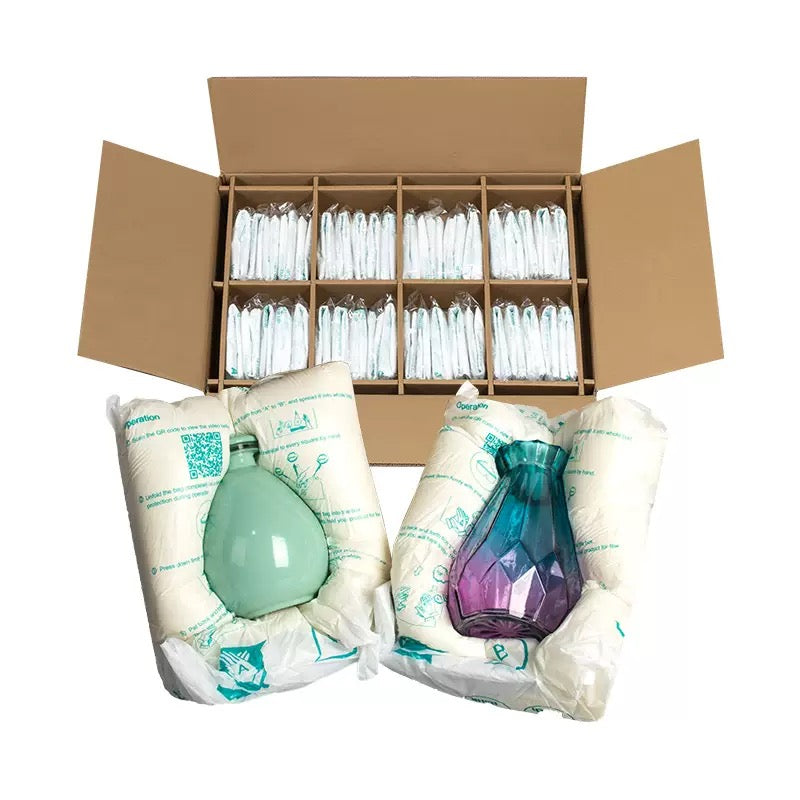
Bubble wrap is the default choice in many packing stations — it is cheap, familiar and available everywhere. Expanding foam bags take a different route: instead of wrapping a product in a sheet of air, the bag forms a cushion that fills the gap between the product and the carton.
Neither option is universally better. The right answer depends on what you ship, how your packers work, and what your carrier does with the parcel. Below is a practical comparison you can test against your own products.
How bubble wrap works
Bubble wrap is a flexible sheet containing air-filled bubbles. You wrap the product, tape the sheet in place, and the air pockets absorb part of the shock in transit.
Its strengths are speed and flexibility. A packer can wrap almost any shape, and the material adapts to odd dimensions. Its weaknesses appear when the product is heavy, has sharp corners, or when the parcel is large enough that the product can shift inside the carton. In those cases the wrap can compress or slide, and protection is uneven.
Expanding foam bags vs. packing peanuts
Packing peanuts (loose fill) are the third option most e-commerce teams consider. They are cheap per cubic foot, but they behave very differently from expanding foam:
- They shift. Peanuts settle and migrate during transit, so the product can work its way to the bottom of the carton — the classic cause of damage claims on heavy fragile items.
- They are messy. Peanuts spill, cling statically and need cleanup at the unpacking station (or vacuum sealing to keep them in place).
- They are voluminous. Loose fill occupies far more storage and trailer space than flat-packed foam bags.
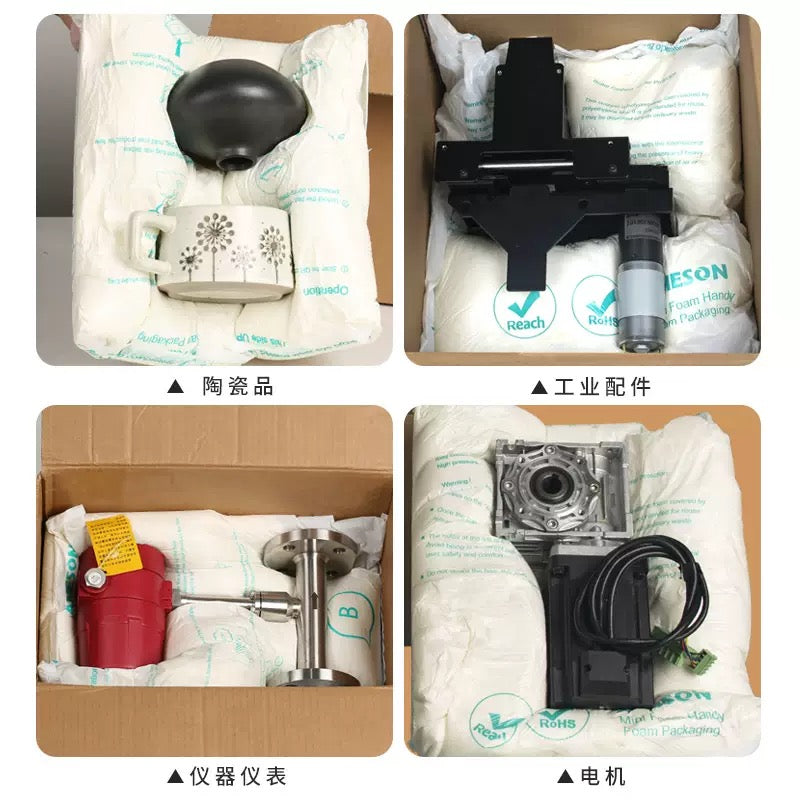
- Breakage framing. For irregular ceramics, glassware and instruments, a 360° custom cushion locks the product in place in a way loose fill structurally cannot — which is why breakage-oriented comparisons usually favor foam-in-bag protection for high-value shipments.
Peanuts remain a reasonable choice for lightweight, uniformly shaped, low-value goods. For fragile and irregular shipments, expanding foam bags deliver better protection per dollar once labor and damage replacement costs are included.
How manual-activated expanding foam bags work
NOX expanding foam bags contain an internal liquid material. Patting and pressing the bag with your hands activates the expansion process — no external air pump or dispensing machine is required.
The bag is placed in the carton and the product is set into position while the material expands. The result is a cushion that follows the shape of the product instead of wrapping around it. Because the cushion is formed inside the carton, it also reduces the empty space a product can move through.
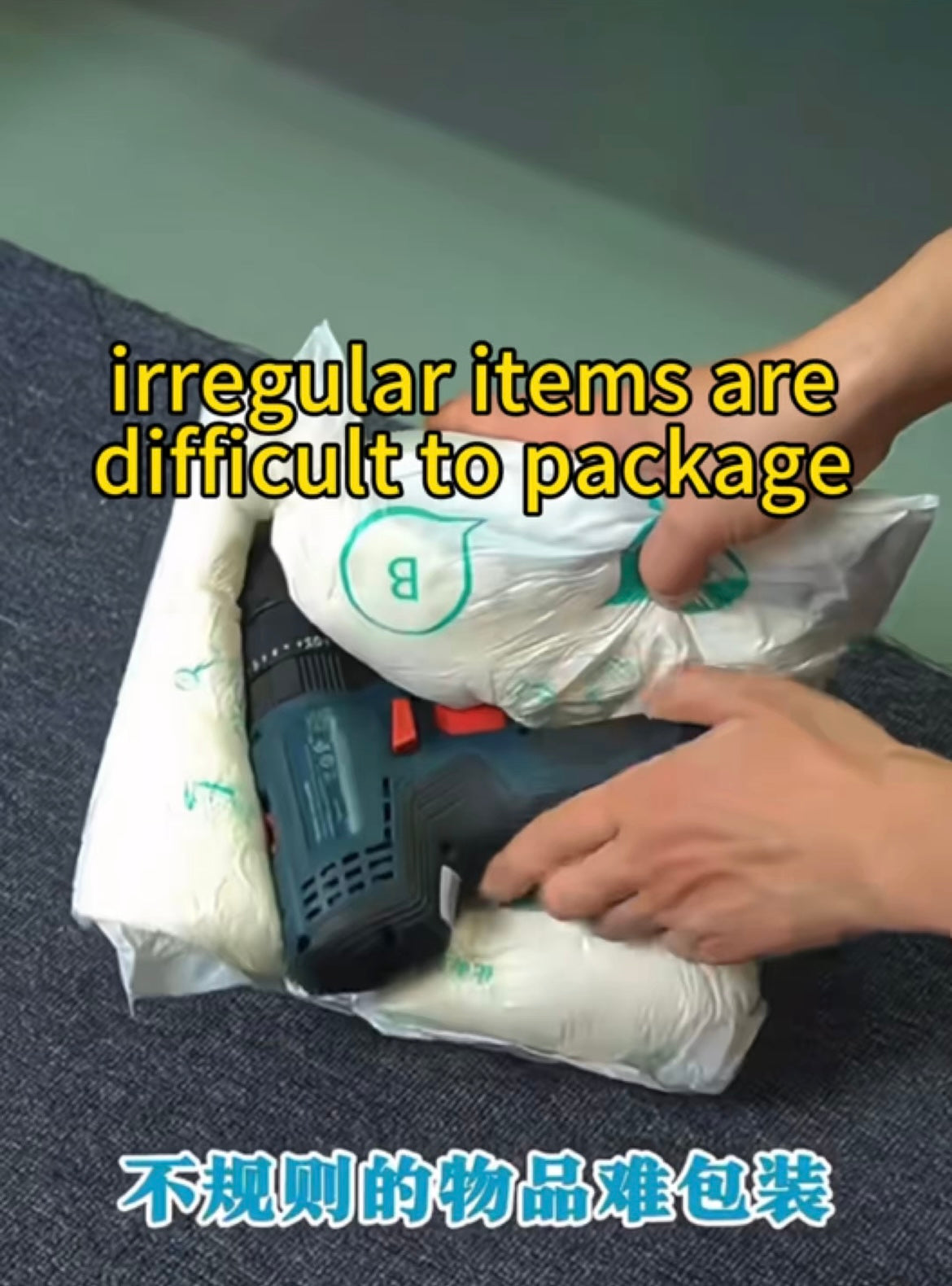
Always follow the manufacturer's operating and handling instructions for activation and timing.
Where the two approaches differ
Activation and workflow
Bubble wrap is ready to use from the roll. Expanding foam bags need a manual activation step per bag, which changes the rhythm of a packing station. For low-volume or high-variability packing, that difference is small. For a tightly timed line, it is worth measuring the step before committing.
Cushioning behaviour
Bubble wrap cushions through air pockets in a fixed pattern. Foam bags cushion by forming around the product. Irregular shapes, protruding parts and mixed orders tend to benefit from the second approach, while flat and uniform products are often fine with the first.
Space inside the carton
Bubble wrap adds volume around the product but does not necessarily stop movement in a partially filled carton. A formed foam cushion fills the gap and can reduce shifting during transit.
Storage and handling
Bubble wrap is bulky before use: a roll of wrap consumes storage volume even when it protects nothing. Expanding foam bags are flat, compact cartons of bags, so the same shelf space holds more shipments' worth of protection. The trade-off is that each bag is single-use material.
Is expanding foam a replacement for bubble wrap?
Not necessarily, and NOX does not claim universal suitability. Different products require different cushioning methods, and some fragile items — very heavy ceramics, for example, or products with thin glass panels — may need a different packaging structure entirely.
Use the comparison below as a starting point for your own test:
| Question | Bubble wrap | Expanding foam bags |
|---|---|---|
| Activation | None | Manual patting and pressing |
| Best for | Regular shapes, low weight | Irregular shapes, gap filling |
| Packing speed | Fast, familiar | Depends on training and volume |
| Storage footprint | Bulky | Flat cartons |
| Reusability | Reusable until damaged | Single use |
How to test before you switch
Do not switch a live packing line based on a comparison table. Run a packaging test with your actual product, your actual carton and your normal carrier route.
- Pack ten typical orders with your current method and ten with the candidate method.
- Include your heaviest and most irregular product, not only the easy ones.
- Drop-test and vibration-test according to the standard your customers require.
- Record damage, packer time and material cost per order.
- Repeat at least once, because one test round is usually luck rather than data.
If the results are close, keep the method that your packers can execute consistently. Consistency matters more than a marginal material advantage.
Sizes and carton quantities
The current NOX product listing shows four sizes — 10#, 20#, 40# and 100# — supplied by full carton:
- 10#: 120 bags per carton
- 20#: 90 bags per carton
- 40#: 78 bags per carton
- 100#: 66 bags per carton
Exact manufacturing dimensions remain subject to factory confirmation, and the minimum order is one full carton. Check the product listing for the latest availability and pricing before planning a production run.
What we do not claim
Material composition, environmental certifications and recycling suitability are still being verified. NOX does not currently make an unverified environmental certification or recyclability claim for these bags, and we do not claim that the product is suitable for every ceramic, glass or electronic item.
If those points are decision criteria for your brand, ask us directly and we will confirm what documentation is actually available before you order.
Try the expanding foam bags before you commit to bulk
- 4 bags included — 2 × Size #10 and 2 × Size #20
- 100% of the $19.90 is credited toward your first bulk wholesale order
- No dispenser machine required — squeeze the bag and it expands in seconds
- Ships from our US DDP channel — duties and clearance included, no hidden fees
Frequently asked questions
Is expanding foam packaging a good alternative to bubble wrap?
It can be worth considering for fragile or irregularly shaped products. Unlike bubble wrap, which uses air-filled bubbles, NOX bags contain an internal liquid material that expands when manually activated. Suitability depends on the product and on your own packaging tests.
What is the difference between bubble wrap and expanding foam bags?
Bubble wrap is a flexible sheet containing air-filled bubbles. NOX expanding foam bags contain an internal liquid material that expands when manually activated by hand. The two solutions differ in material, activation method, packaging format and workflow.
Can expanding foam bags completely replace bubble wrap?
Not necessarily. Different products require different cushioning methods. Evaluate product shape, weight, packaging workflow and shipping requirements before choosing an alternative to bubble wrap.
Do NOX foam bags require an air pump or machine?
No external air pump or dispensing machine is required for the manual activation process. Follow the manufacturer's instructions for correct activation and handling.
Related products
Need protective packaging for your shipments?
Compare options with our team before you commit to a carton size. Share your product dimensions and shipping volume and we will confirm suitability.
Related articles
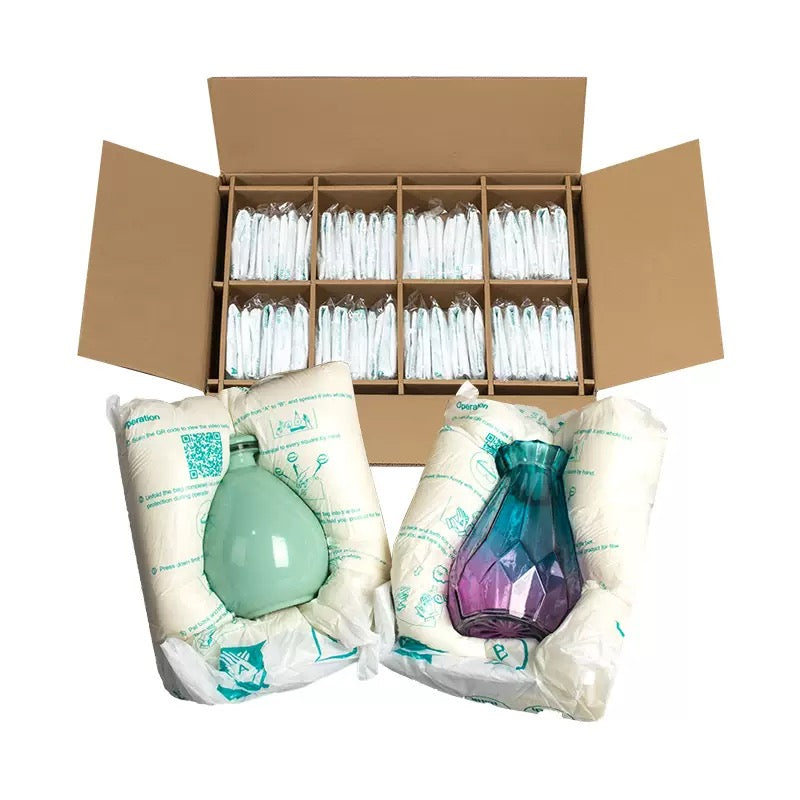
Foam Packaging vs Bubble Wrap: Cost, Handling and Protection Comparison
An unbiased B2B comparison of manual-activated expanding foam packaging vs bubble wrap for fragile shipping: protection, handling time, storage, and when each wins.
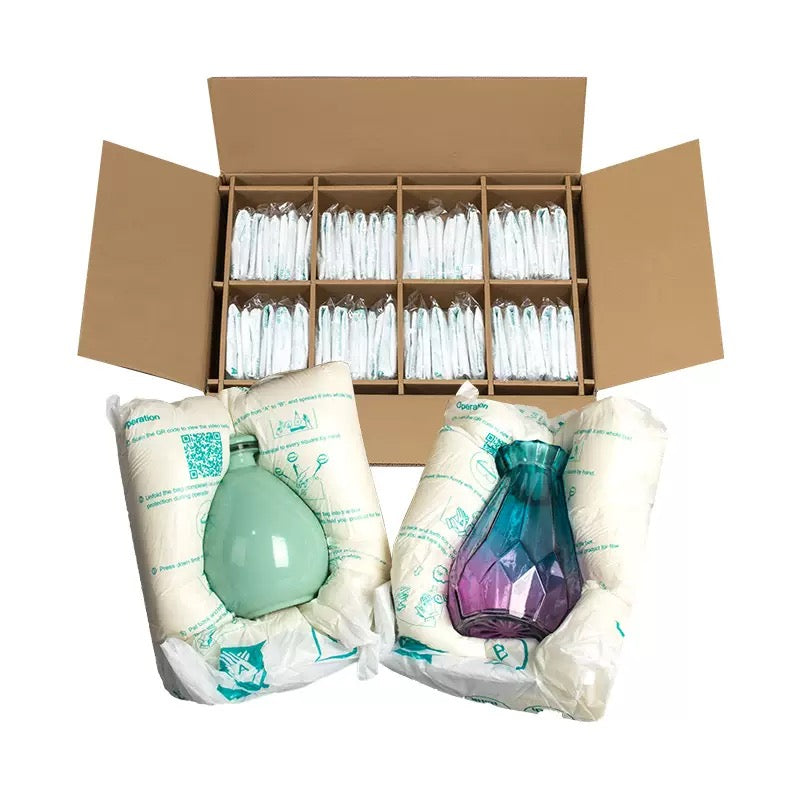
Expanding Foam Bags Sizing Guide (#10 to #100): How to Choose the Right Bag for Fragile Shipments
Choose the right NOX expanding foam bag size (10#, 20#, 40#, 100#): confirmed flat dimensions, bags per carton, carton prices and typical uses for ceramics, glass and irregular items.
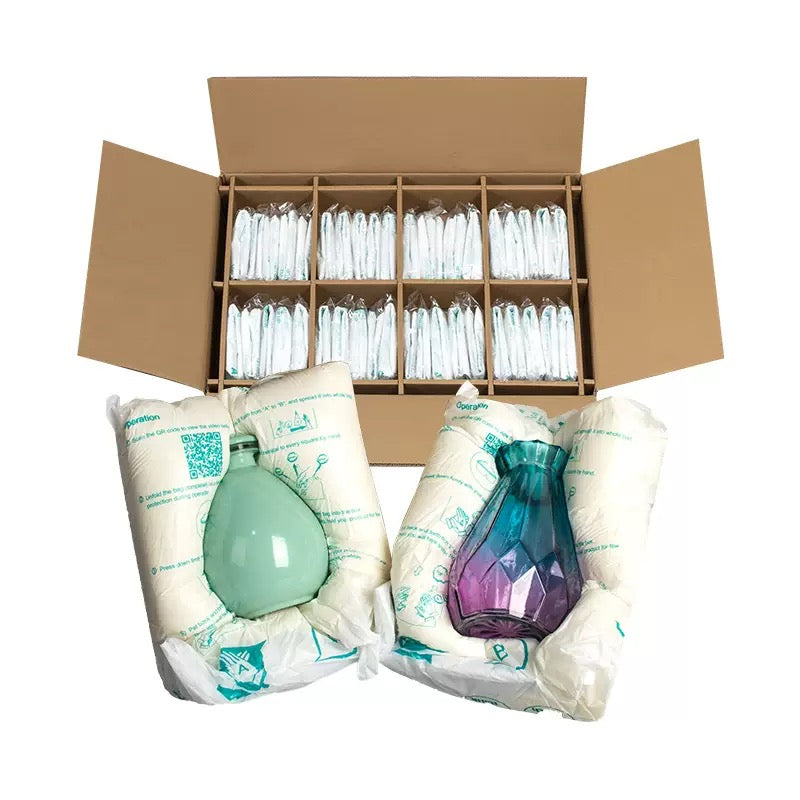
How to Package Ceramic Products for Shipping: Reducing Breakage Risk
A practical B2B guide to shipping ceramics safely: box-in-box method, cushioning choices, and how NOX manual-activated expanding foam bags can cushion fragile, irregular shapes.