How to Choose Protective Packaging for Fragile Products
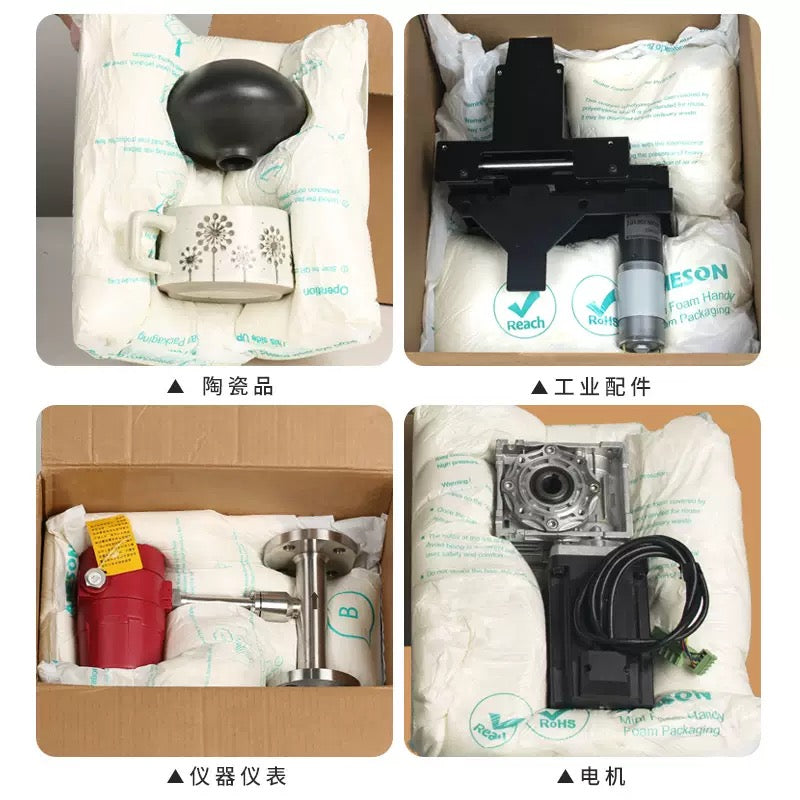
Most damaged parcels are not damaged because the packaging was thin. They are damaged because the product could move. A carton with two centimetres of empty space around it turns every carrier impact into a collision between the product and the box wall.
Choosing protective packaging is therefore less about picking a material and more about matching three things: product shape, carton size and the journey the parcel actually takes.
Step 1: Start from the failure, not the material
Before comparing options, write down what usually goes wrong with your shipments. Typical failures look different:
Cracking at a corner. The product hits the carton wall at an angle. This is a gap problem, not a thickness problem.
Surface scratches. The product moves against a rough surface during vibration. Wrapping alone often solves this.
Total loss in a crushed carton. The outer box fails under stacking load. No amount of inner cushioning fixes a carton that is too weak for the stack.
Damage to one component only. A protruding handle or spout takes the impact. These products need local protection or a formed cushion, not an even wrap.
Each failure points to a different fix. Buying more material for all four is the expensive way to solve one.
Step 2: Match the cushion to the shape
Regular, flat products are the easiest case. A wrap that holds the product still and separates it from the carton wall is usually enough.
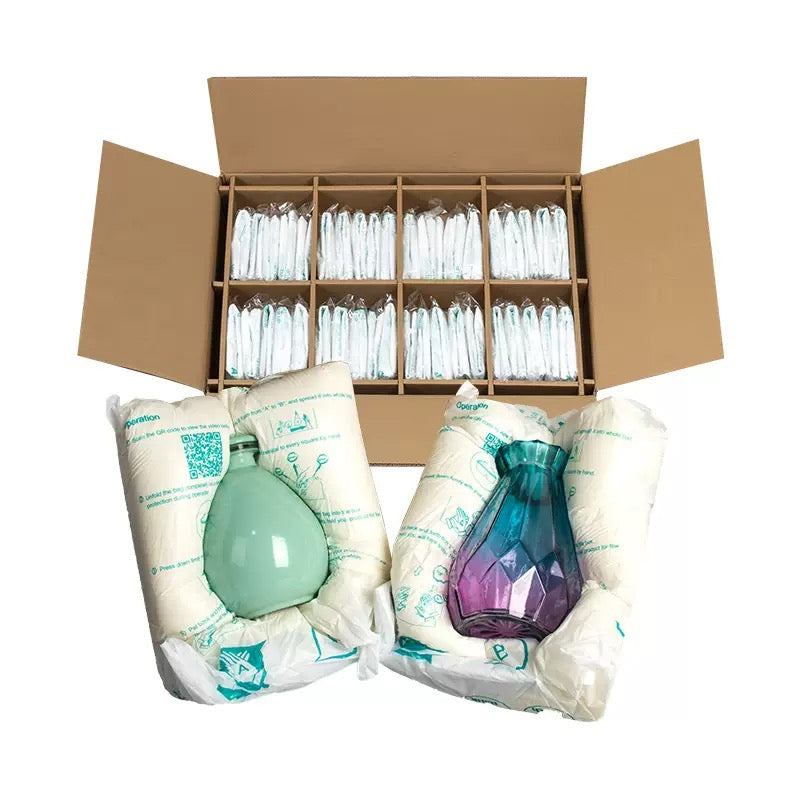
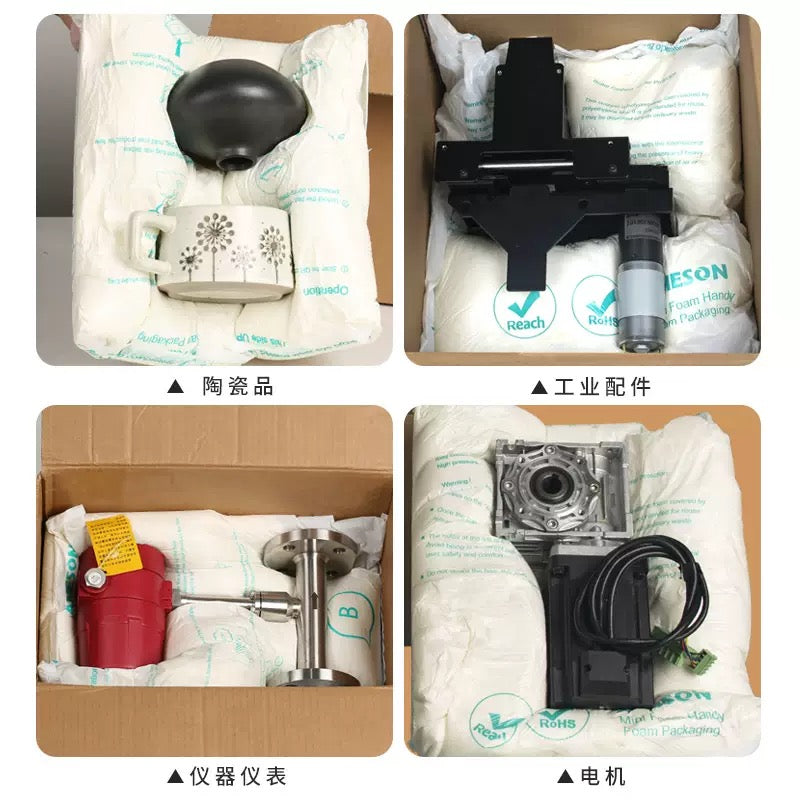
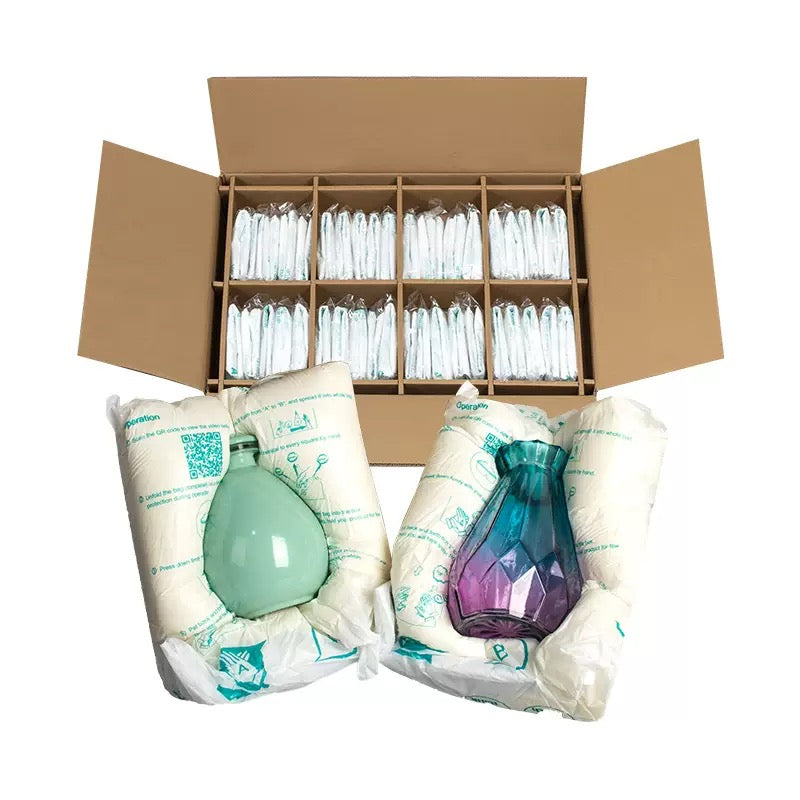
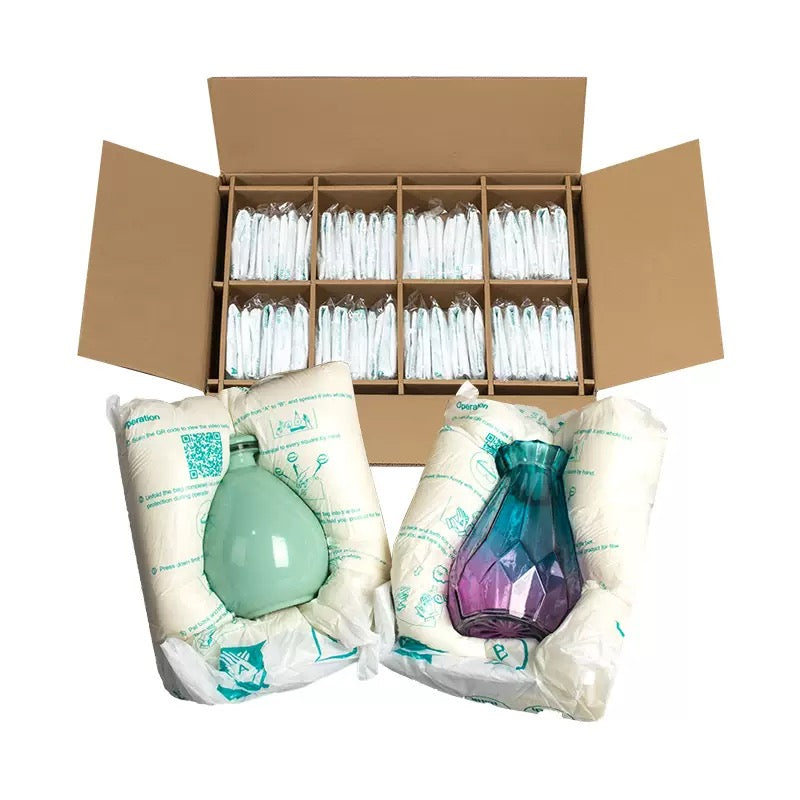
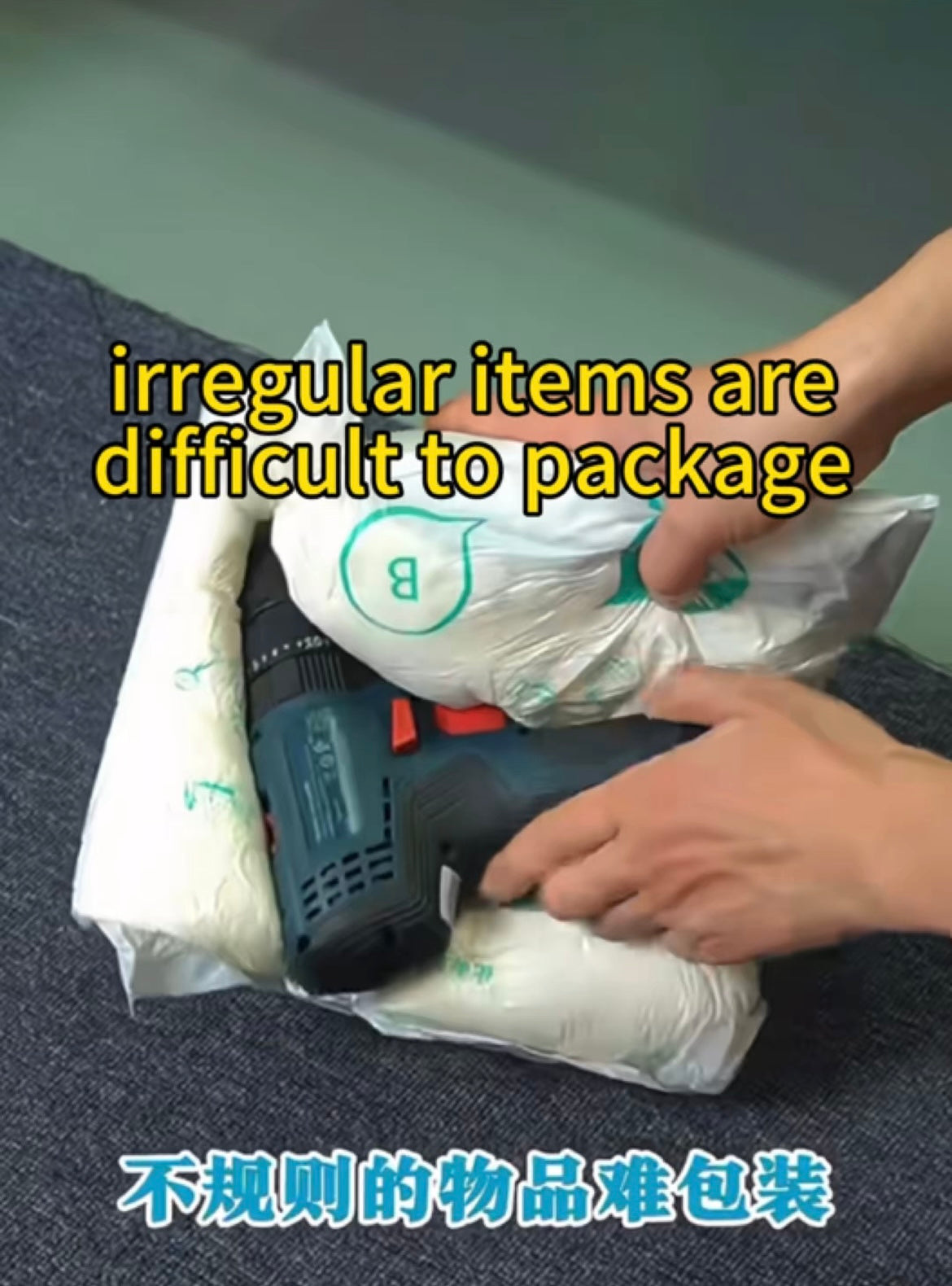
Irregular products — bottles with necks, ceramics with handles, products with sharp corners — are harder. A wrap can bridge across a gap instead of filling it, and the product still shifts. Expanding foam bags take the other approach: the bag expands around the product, so the cushion follows the shape rather than crossing over it.
For heavy products, check the cushion's behaviour under load rather than its thickness. A material that compresses to a thin layer under a heavy item provides far less separation than its original thickness suggests.
Step 3: Size the carton around the cushion
The most common avoidable mistake is ordering one carton size and filling the difference with material.
A useful rule: choose the smallest carton that fits the product plus the cushion you intend to use, then confirm the packed carton cannot shift when you shake it gently. If the product moves, the carton is too large — not under-filled.
This is also where void fill becomes expensive. Material used to take up space is material that is not protecting anything.
Step 4: Test with your real route
Lab conditions and your carrier network are not the same. A packaging test should reflect what the parcel actually experiences:
- Pack ten typical orders with the current method and ten with the candidate method.
- Include the heaviest, the most irregular and the cheapest item in the range.
- Run drop tests from the heights your carrier network implies, plus vibration.
- Inspect the product after every drop, not only at the end.
- Repeat the round at least twice before deciding.
If damage rates are similar, choose the method your packers can repeat consistently at your normal volume. A process that only works when someone experienced is on shift is not a process.
Step 5: Check the commercial side
Protective packaging decisions are also purchasing decisions. Three details are worth confirming before you commit:
- Order unit. Some products are sold by full carton only. NOX expanding foam bags, for example, have a minimum order of one full carton in 10#, 20#, 40# or 100#.
- Shipping terms. Confirm whether freight is included for your destination and whether any remote-area or special-handling surcharge applies.
- Documentation. If your customers ask about material composition or recyclability, confirm what documentation actually exists before you print anything on the box.
When to ask before you buy
Some questions cannot be answered from a product page. If your product is unusually heavy, has a glass component, or ships through a route with known handling problems, describe it and ask for a recommendation instead of ordering the largest size available.
NOX does not claim that any single cushioning method is suitable for every ceramic, glass or electronic product. The right answer comes from your product and your test results — we can help you interpret both.
Try the expanding foam bags before you commit to bulk
- 4 bags included — 2 × Size #10 and 2 × Size #20
- 100% of the $19.90 is credited toward your first bulk wholesale order
- No dispenser machine required — squeeze the bag and it expands in seconds
- Ships from our US DDP channel — duties and clearance included, no hidden fees
Frequently asked questions
How do I know if my packaging is good enough for fragile products?
Run a packaging test with your real product, your real carton and your usual carrier route. Drop and vibration testing, repeated over more than one round, is more reliable than judging a material by appearance.
Is more cushioning always better?
No. A carton that is too large lets the product move, and extra material can hide that movement in a visual check. Filling the gap so the product cannot shift matters more than adding layers.
Are expanding foam bags suitable for all fragile products?
No universal suitability is claimed. The appropriate method depends on the product's dimensions, weight, shape and packaging requirements. Conduct a packaging test before adopting any product for routine commercial shipments.
Should I use the same packaging for every product in my range?
Usually not. Heavy, irregular and flat products fail for different reasons, so a single cushioning method rarely performs equally across a full catalogue.
Related products
Need protective packaging for your shipments?
Compare options with our team before you commit to a carton size. Share your product dimensions and shipping volume and we will confirm suitability.
Related articles
How to Package Ceramic Products for Shipping: Reducing Breakage Risk
A practical B2B guide to shipping ceramics safely: box-in-box method, cushioning choices, and how NOX manual-activated expanding foam bags can cushion fragile, irregular shapes.
Foam Packaging vs Bubble Wrap: Cost, Handling and Protection Comparison
An unbiased B2B comparison of manual-activated expanding foam packaging vs bubble wrap for fragile shipping: protection, handling time, storage, and when each wins.
Instapak Quick RT Alternative: How to Cut Foam-in-Bag Packaging Costs Without a Machine
Looking for a no-machine alternative to traditional foam-in-bag systems? Discover how room-temperature expanding foam bags eliminate $3,000+ dispenser equipment and save 85%+ warehouse space.