Expanding Foam Packaging Bags vs. Bubble Wrap & Air Pillows: Which Protects Fragile Shipments Better?
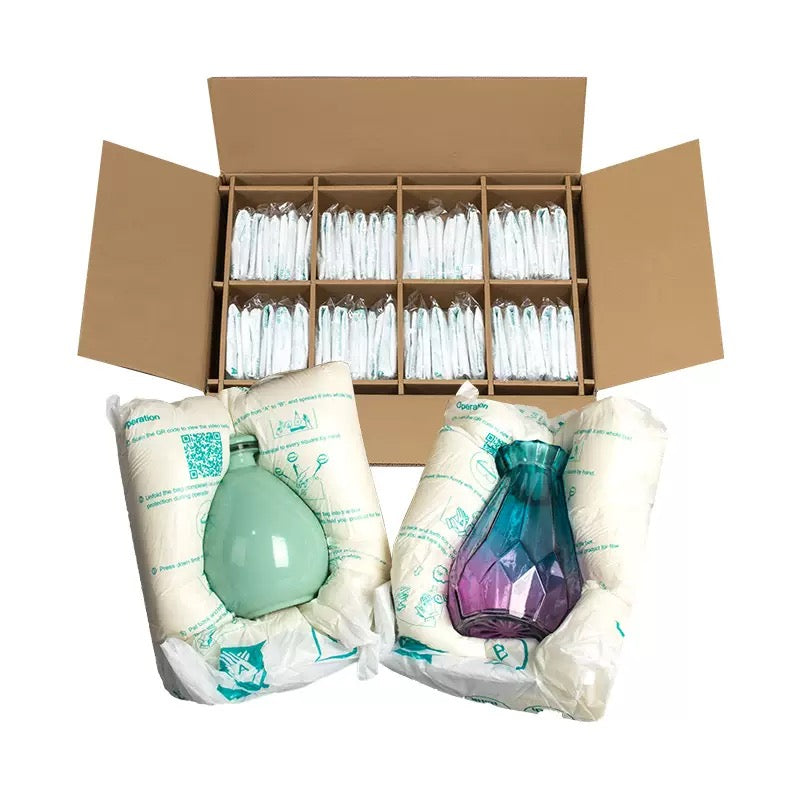
Protective packaging decisions depend on how a product behaves in a carton, how a team packs at speed, and what a damage claim costs.
Bubble wrap and air pillows are familiar because they are cheap, light and available almost everywhere. Expanding foam bags take a different approach: instead of wrapping the item or filling empty space with air, the bag forms a cushion around the product inside the carton. For fragile shipments, that difference changes how much the product can move during transit.
This guide compares the three options from a buyer's point of view. It avoids universal claims, because no packaging material protects every product equally well.
What bubble wrap and air pillows are good at
Bubble wrap is a sheet of plastic film with air-filled bubbles. It is flexible, fast to apply and useful for surface protection. A packer can wrap a single item, secure it with tape and place it in a carton without special equipment.
Air pillows are pre-filled or machine-filled plastic cushions used mainly for void fill. They are light, clean and efficient for parcels where the main problem is empty space. For a carton containing a few small, uniform items, air pillows can reduce movement at low material cost.
Both options share an important limitation: they do not become a custom-shaped cushion. Bubble wrap follows the outside of the product, while air pillows occupy the free volume around it. If the product is irregular, heavy or has protruding parts, it can still shift inside the carton.
Where the limitations appear
- Sharp corners can compress a bubble sheet or puncture an air pillow.
- Mixed-SKU orders leave inconsistent gaps that generic void fill cannot fully control.
- Long carrier routes give products more time to settle and migrate.
- High-value items make even a small damage rate expensive.
None of this makes bubble wrap or air pillows a bad choice. It simply defines the range where they perform best: light, regular, lower-risk products with stable carton dimensions.
How expanding foam bags work
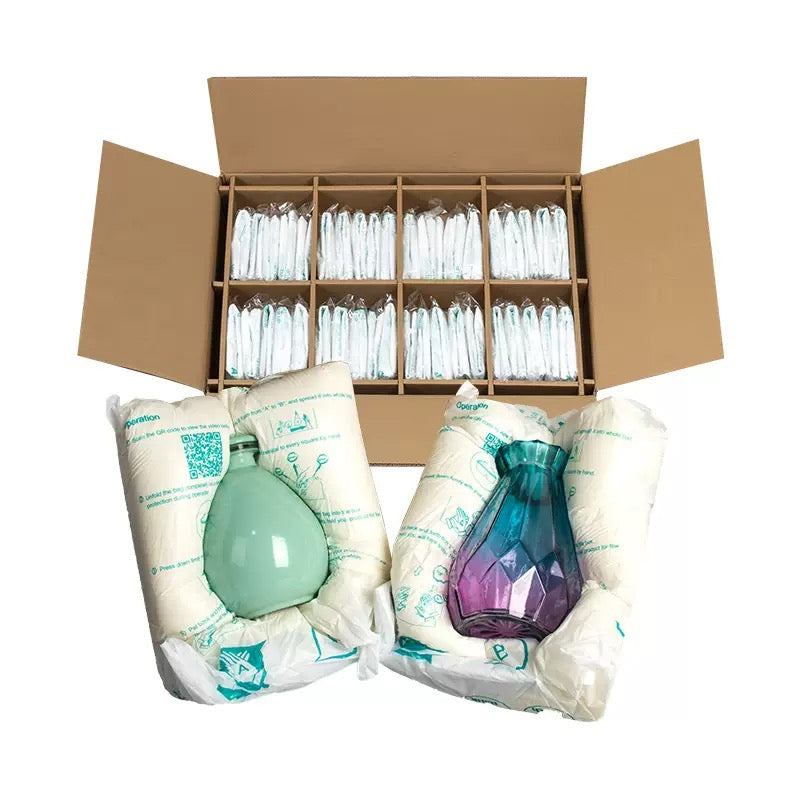
NOX expanding foam bags are supplied flat. A packer places the bag in the carton, activates it by hand, and positions the product while the material expands. The cushion forms around the product instead of merely surrounding it.
Manual activation, no machine required
There is no dispenser, pump, air compressor or chemical cartridge. That matters for small and medium operations that cannot justify a foam-in-place machine, and for packing lines where product shapes change frequently. The trade-off is a manual step per bag, which should be measured in your own workflow.
Cushion geometry
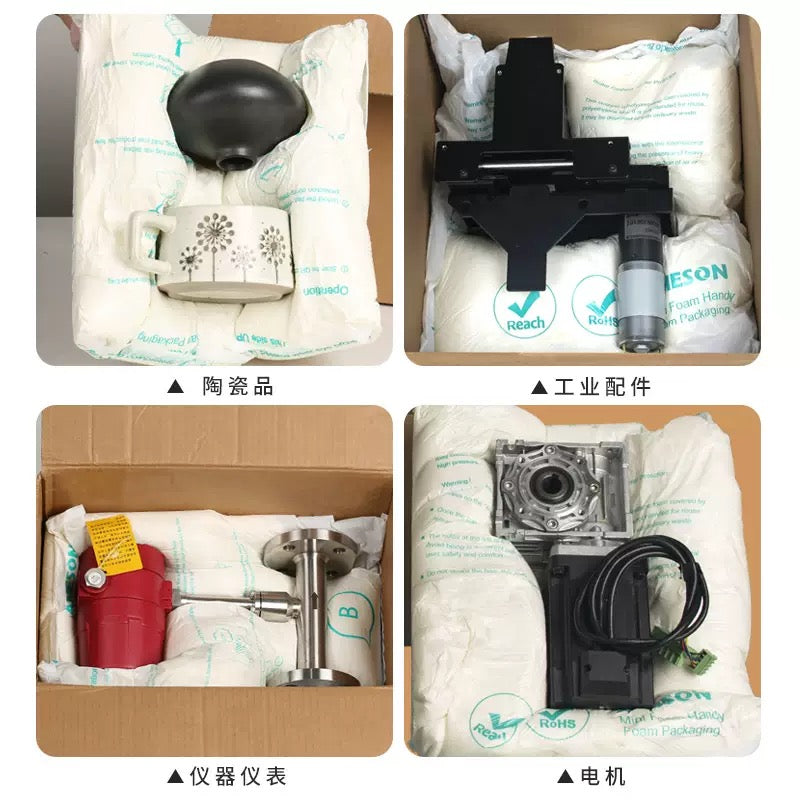
A formed foam cushion reduces the free space in which a product can travel. For ceramics, glassware, instruments, cosmetics and other irregular items, immobilisation is often more important than the softness of the material. A product that cannot shift is less exposed to repeated impacts.
Storage footprint
Flat-packed bags occupy far less warehouse space than rolls of bubble wrap or stored air-pillow film. For import buyers, that difference also affects freight volume. A compact carton of flat bags is easier to stock than bulky void-fill rolls.
Side-by-side comparison
| Criteria | Bubble wrap | Air pillows | Expanding foam bags |
|---|---|---|---|
| Main role | Surface wrap | Void fill | Formed cushioning |
| Activation | None | None or machine-filled | Manual pressing |
| Irregular shapes | Good surface conformity | Limited | Strong gap-filling |
| Product movement | Can still shift | Can still settle | Reduced when formed |
| Storage | Bulky rolls | Film rolls or bags | Flat cartons |
| Best-fit products | Regular, lightweight | Small, uniform goods | Fragile, irregular, higher value |
| Equipment | None | May need inflator | None |
Choosing by shipment profile
For fragile and irregular products
If you ship ceramics, glass, framed items, instruments or mixed gift sets, expanding foam bags deserve a trial. The value is not that the material is softer; it is that the cushion can be formed around the product. That reduces movement inside the carton, which is a common source of transit damage.
For flat and uniform products
If your products are flat, durable and consistently sized — apparel, soft goods, catalogues or simple boxed items — bubble wrap or air pillows are usually sufficient. Paying for a formed cushion may not improve outcomes.
For high-volume packing lines
Throughput matters. A manual activation step is easy to learn, but it still takes time. Measure bags per hour per packer before committing. For very high-volume lines with stable SKUs, a machine-based system may be more appropriate. For variable SKUs and moderate volume, the flexibility of a manual bag often wins.
For heavy items
Heavy products need both cushioning and structural carton support. No soft material can compensate for an under-rated carton. Use foam bags to control movement, but confirm carton strength, sealing method and carrier weight limits separately.
Look at landed cost, not only unit price
Material price is only one part of the equation. A cheaper roll can still be more expensive per successful delivery if it leads to more damage, more re-packing labour or more warehouse space.
A practical cost model should include:
- Material cost per order
- Packer time per order
- Storage and handling cost
- Damage and replacement rate
- Freight and duty for imported packaging
- Customer-service cost linked to damaged parcels
For US buyers, DDP shipping also matters: it includes customs clearance and duties in the quoted price. Confirm that the quote covers a commercial address and ask for the delivery window.
How to run a controlled test
Do not switch a live packing line based on a comparison article. Run a short test using real orders.
- Pack ten typical orders with your current method and ten with the candidate method.
- Include the most irregular and heaviest product you regularly ship.
- Use the same carton size and carrier route where possible.
- Record packer time, material use and visible movement after sealing.
- Review damage and customer complaints over a defined period.
If the results are close, choose the method your team can repeat consistently. Consistency usually matters more than a small theoretical material advantage.
Common mistakes to avoid
Under-filling a carton defeats any cushioning system. Confirm the correct bag size, train packers on placement and expansion time, and keep more than one size if your product range varies. Cushioning also cannot compensate for a weak carton or poor sealing.
The practical verdict
Bubble wrap is a good general-purpose surface protector. Air pillows are efficient void fill for light, uniform goods. Expanding foam bags are strongest when the job is to immobilise a fragile or irregular product inside a carton without investing in dispensing equipment.
For a B2B buyer, the right question is not "which material is best?" It is "which product, carton and route are we protecting?" Answer that first, then test the material that matches the failure mode you are actually trying to remove.
Try the expanding foam bags before you commit to bulk
- 4 bags included — 2 × Size #10 and 2 × Size #20
- 100% of the $19.90 is credited toward your first bulk wholesale order
- No dispenser machine required — squeeze the bag and it expands in seconds
- Ships from our US DDP channel — duties and clearance included, no hidden fees
Frequently asked questions
Are expanding foam bags better than air pillows for fragile products?
They are often a better fit for irregular or high-value fragile products because the cushion forms around the item instead of only filling empty space. Air pillows still work well for light, uniform products and void fill.
Do expanding foam bags replace bubble wrap completely?
Not always. Bubble wrap remains useful for surface protection and wrapping individual items. Expanding foam bags are strongest when the goal is to immobilise a product inside a carton.
Is a dispenser machine required?
No. NOX expanding foam bags are activated manually by patting and pressing the bag. No machine, pump or chemical cartridge is needed at the packing station.
What should we test before switching packing materials?
Run a controlled A/B test with your real products, cartons and carrier routes. Compare damage, packer time and total cost per shipped order rather than material price alone.
Related products
Need protective packaging for your shipments?
Compare options with our team before you commit to a carton size. Share your product dimensions and shipping volume and we will confirm suitability.
Related articles
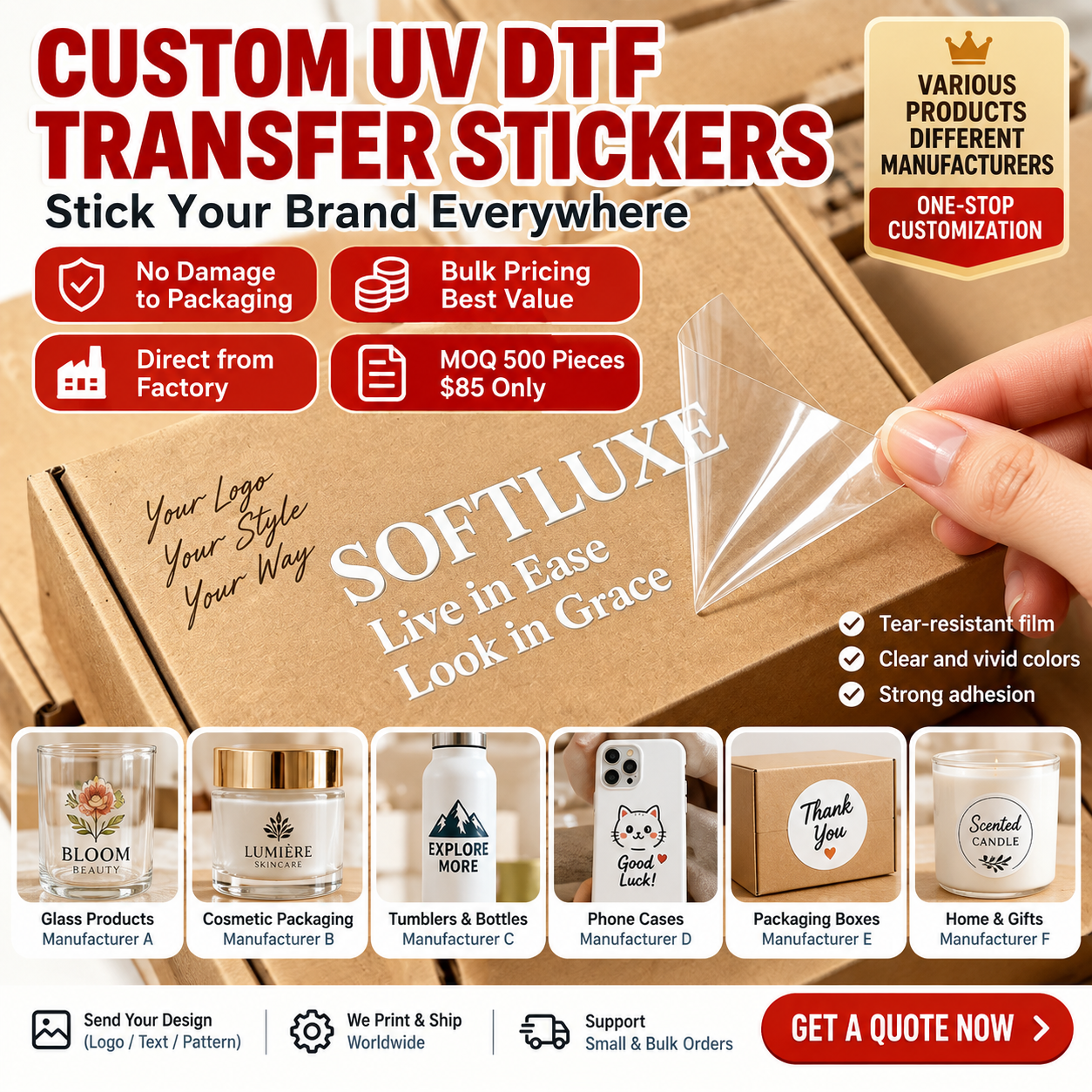
UV DTF Transfer Stickers vs. Traditional Vinyl Labels: Waterproof & Scratch-Resistant Packaging Guide
Compare UV DTF transfer stickers with traditional vinyl labels for packaging: surface compatibility, waterproof performance, scratch resistance, artwork setup and ordering at $85 per 500 pcs.
How to Order Custom Luxury Rigid Boxes with Low MOQ (300 pcs) & DDP Shipping to the USA
A practical B2B guide to ordering custom rigid gift boxes with 300 pc low MOQ, artwork preparation, sample approval, DDP shipping to the USA and cost control.
Foam Packaging vs Bubble Wrap: Cost, Handling and Protection Comparison
An unbiased B2B comparison of manual-activated expanding foam packaging vs bubble wrap for fragile shipping: protection, handling time, storage, and when each wins.